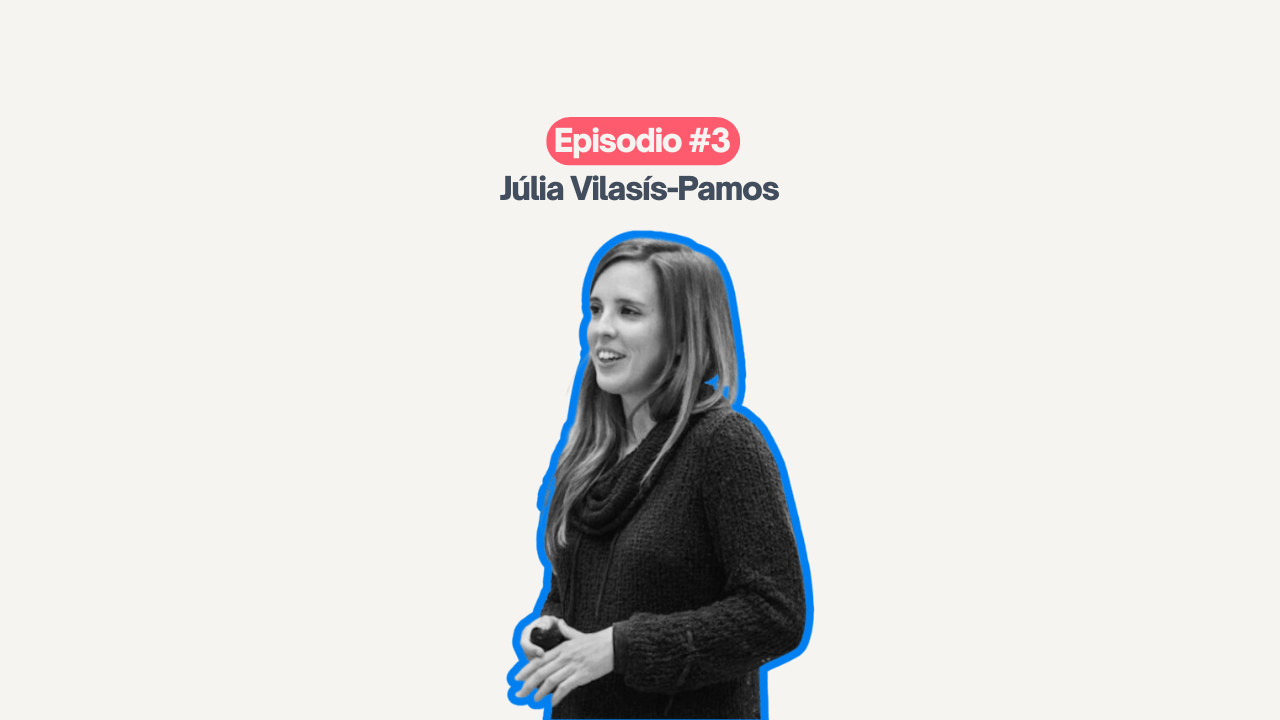
Júlia Vilasís-Pamos: “Playcomp as a project is incredibly important because it is linked to shortcomings that I detected in secondary education.”
Júlia Vilasís-Pamos is a professor in the Department of Applied Pedagogy and Educational Psychology at the UIB and our guest in episode #3 of the Playcomp podcast.
This time, Alejandro and Júlia reflect on video game literacy and the role that video games play in digital culture.
Throughout the conversation, the importance of integrating video games into media literacy is analyzed, understanding that they form part of students’ cultural environment. Júlia Vilasís-Pamos also discusses how Playcomp addresses this dimension in the educational field and emphasizes: “As a project, it’s incredibly important because it is linked to shortcomings that I detected in secondary education.” In this sense, she explains how the project promotes video games as an educational and cultural tool: “We use independent games and aim not only to introduce teenagers to them, but also to motivate them to continue playing them.”
Throughout the episode, the need for teachers to develop a critical and pedagogical perspective on video games is mentioned, not only as a tool, but as a key element in the way students learn, interact, and build knowledge.
Here you can watch and listen to Episode #3:
The Playcomp podcast is a science outreach initiative that explores the use of video games in education, focusing on their cultural, pedagogical, and social dimensions.
Playcomp is a project funded by the Spanish State Research Agency. It has a team of 17 researchers from 12 European universities who are analyzing teachers’ video game literacy. The main objective is to enrich students’ educational experience and promote the development of civic and socio-emotional skills through the use of independent video games.